VISUAL ARCHIVE
This section gathers visual documents from theatrical works and performance-based projects, including stage photography and poster designs, these materials are not presented as standalone works, but as ectensions of a continous artistic practice rooted in theater, ritual, and visual storytelling
PHOTOGRAPHY
AHLE HAVA (The Link Between Ritual and Theatre Photography)
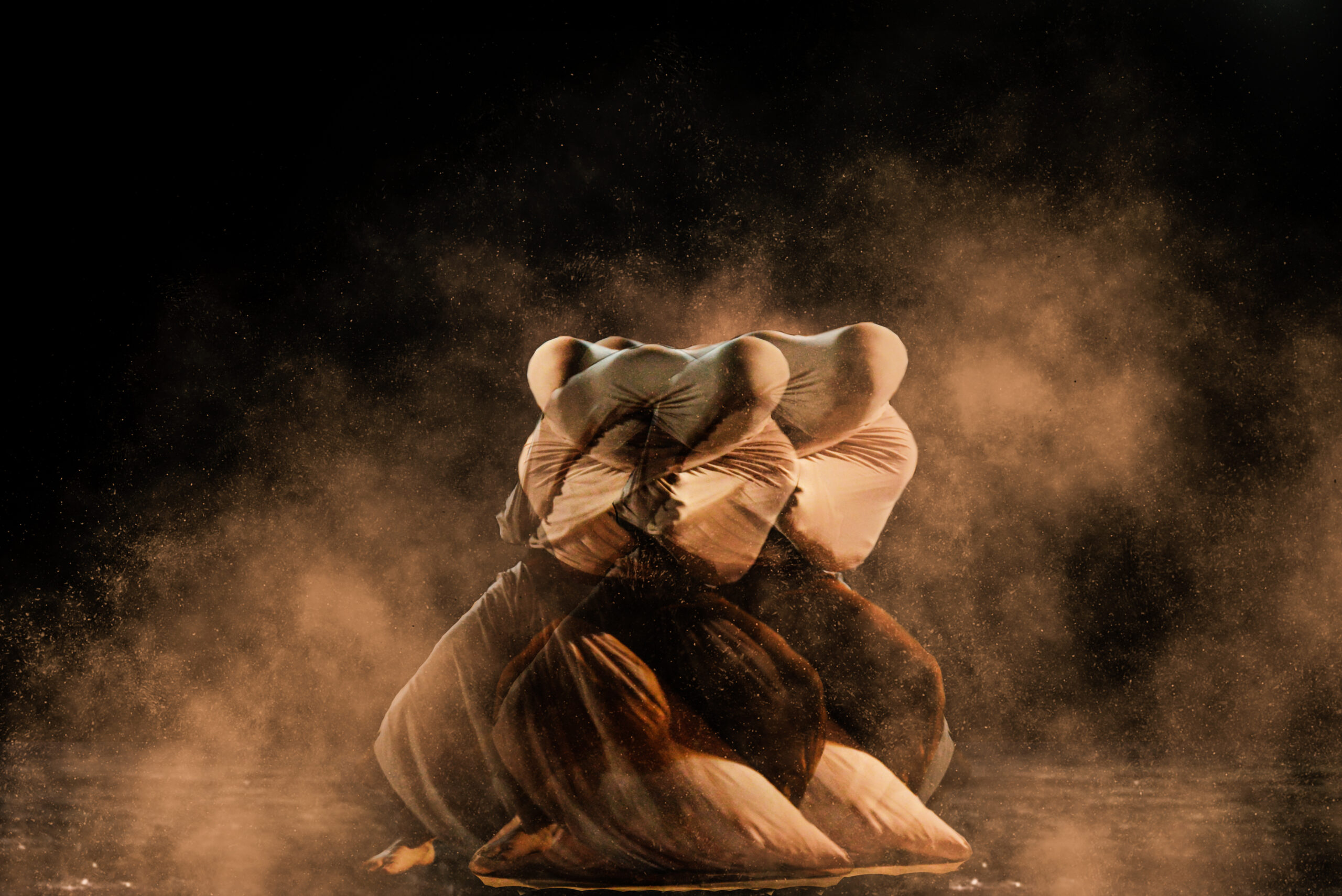
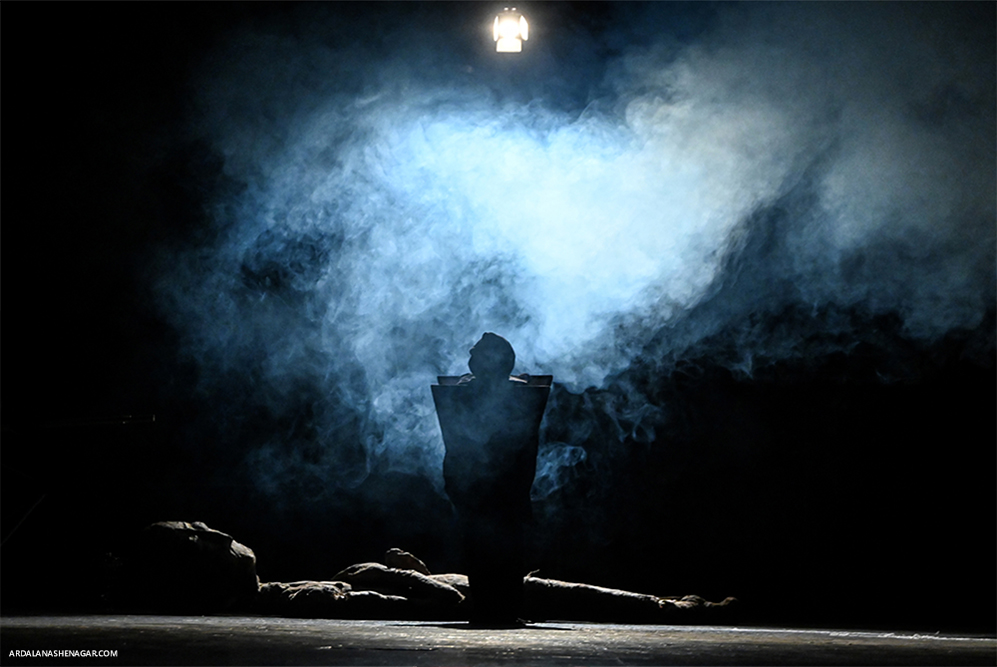
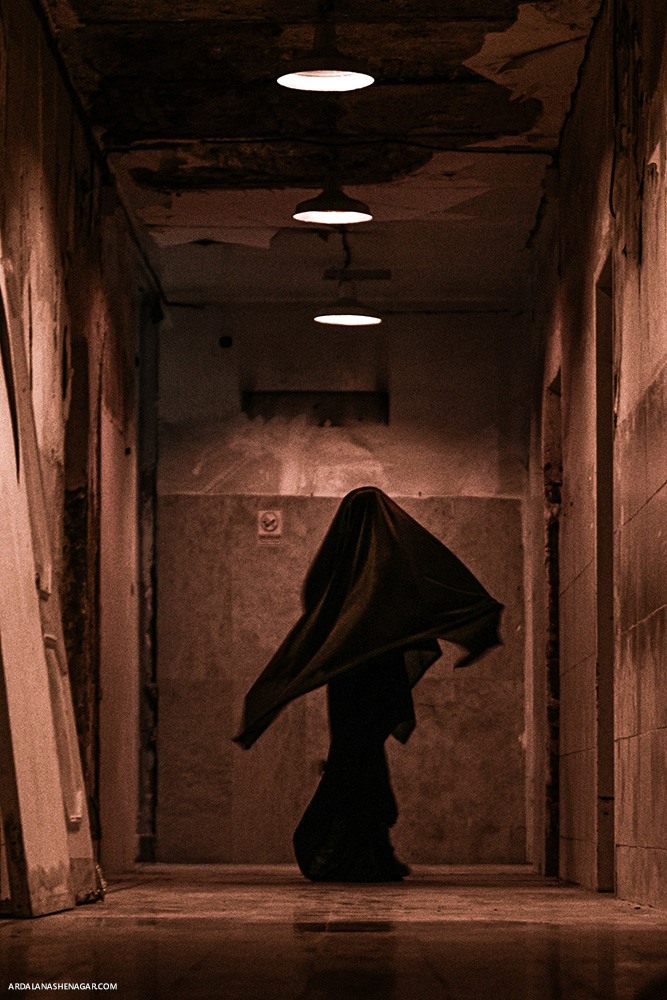
In this image, the body concealed beneath a brown cloth evokes an in-between, threshold-like condition—an attitude of transition found in ritual life. It is a moment suspended between appearance and disappearance, between individual identity and transformation through a collective order. The cloth is not merely a scenic element; it functions as a sign of covering, transformation, and entry into an “incipient” ritual state. In such a condition, everyday selfhood is put on hold and the body becomes a vessel of meaning.
The photograph here is not only the capture of a performative moment, but the documentation of an explicitly ritual quality—shaped through light, texture, color, and stillness. The heavy, earthy brown palette and the barren, desolate atmosphere suggest soil, ground, and the mnemonic textures of ritual practices associated with “zar.” In these contexts, the body, voice, and rhythm often serve as intermediaries for moving from suffering toward release.
Within this connection, theatre photography becomes a research tool: an attempt to record the moment when stage-like space turns into ritual space. The hidden body—rendered visible through concealment—acts as evidence of lived experience, where the image preserves not form alone, but the layered, often invisible dynamics of practice inside performance. The aim is not to document aesthetic arrangement only; rather, the photograph works as a document of how ritual inhabits contemporary art—where the image itself becomes a testimony to presence.
DIV (Div in a Ritual Reading)
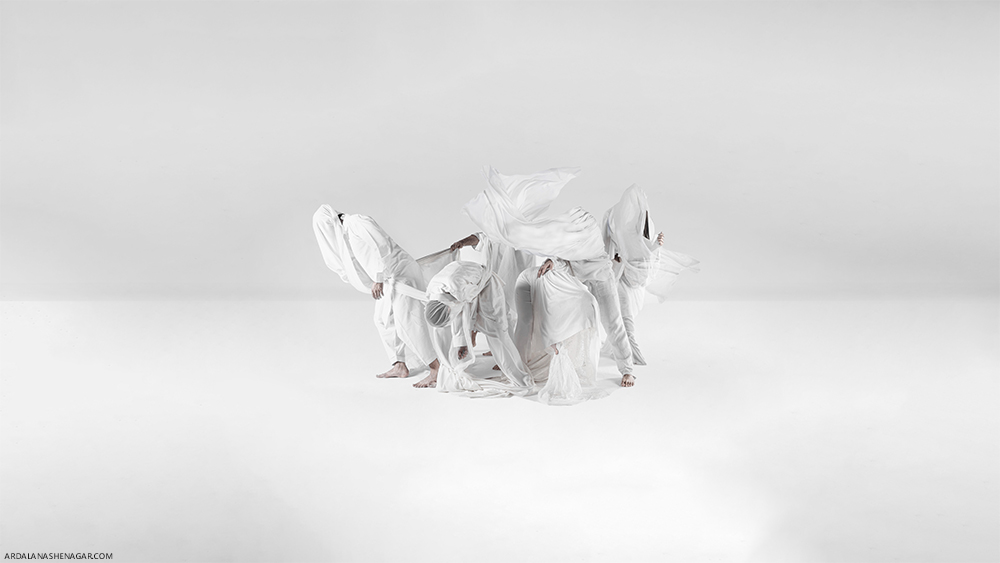
The project “Div” seeks to reimagine Iranian divs through a contemporary visual language. However, it does not stop at depicting the outward form of the demon; rather, it approaches the div as a living cultural sign—a force that carries both the image of the demon itself and the internal state of being affected by it, or “div-zadegi.” For this reason, the image is not only about a “demon character,” but also about the quality of the encounter with it: how the presence of the div alters the body, the mind, and the surrounding atmosphere.
From the perspective of ritual studies and symbolic anthropology, the significance of the project lies precisely here. In this reading, the div is a threshold figure—an entity that activates fear, disorder, transformation, and the disruption of everyday order. When the artist depicts both the div and the “madness” that follows seeing it—meaning the condition of being struck or affected by the div—the work moves closer to ritual imagery: an encounter with something terrifying is presented in a way that suggests the human body and perception themselves are transformed.
In this interpretation, the project’s aim is to translate mythic force into a contemporary visual form while preserving its ritual charge. The image is therefore not merely a record of composition or stage-like aesthetics, but a document of the “effect of encounter.” The div is not simply seen; it activates something within the subject’s world—an instability of presence, a shift in gesture, a transformation of space, and the emergence of a new condition. In this sense, the div functions as a transformative force, while the human body or group appears as a kind of “collective body under influence.”
Divab (Ritualized Atmosphere in Theater Photography)
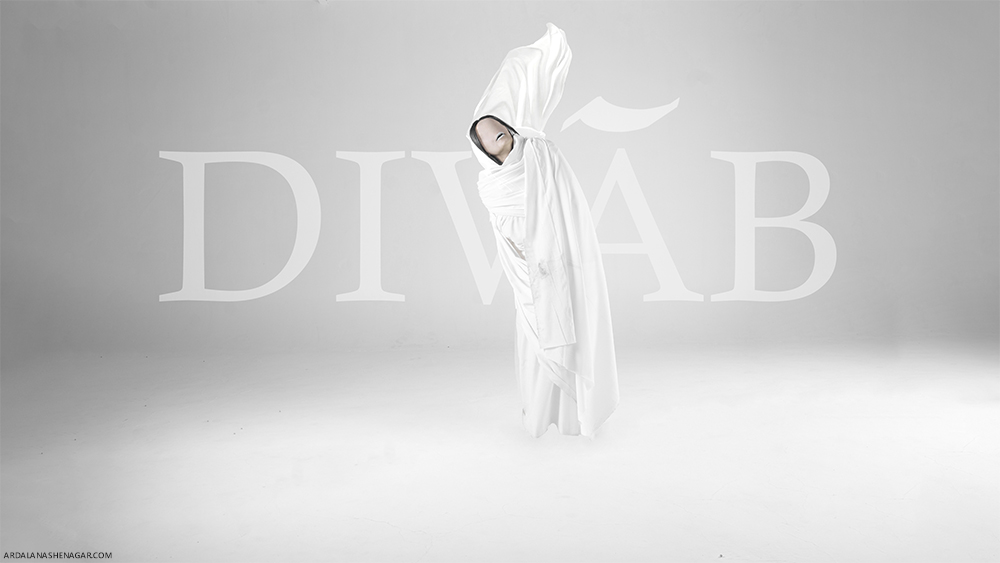
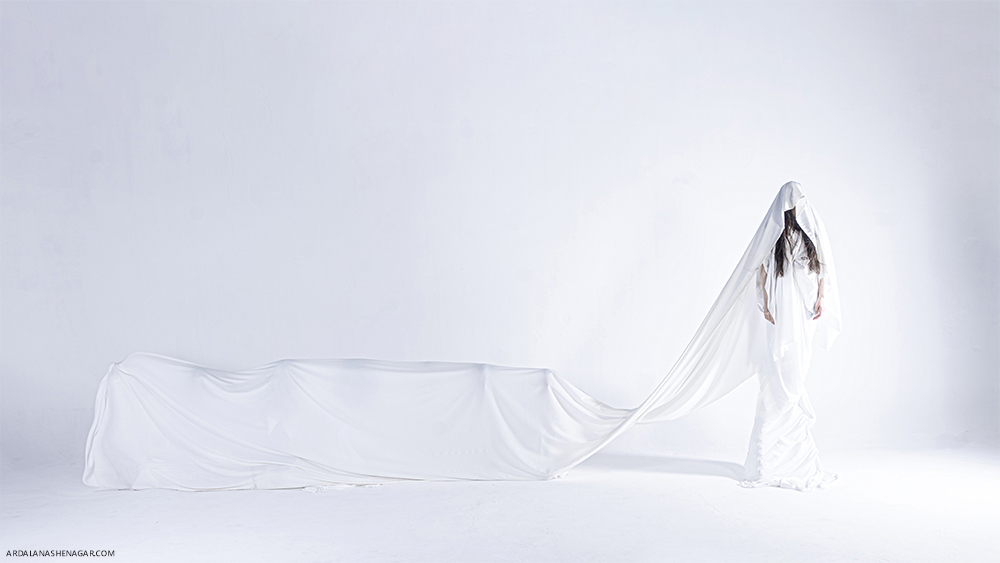
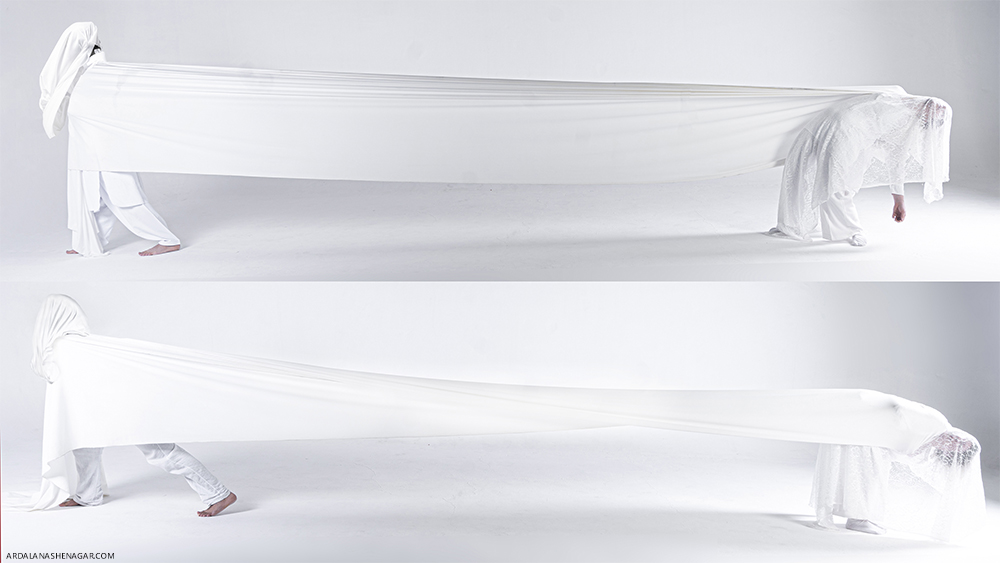
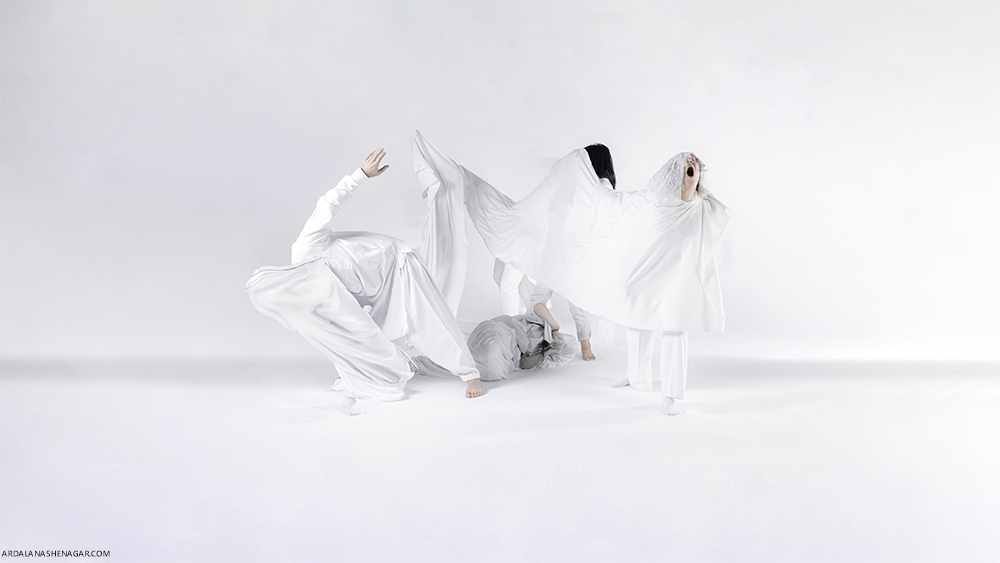
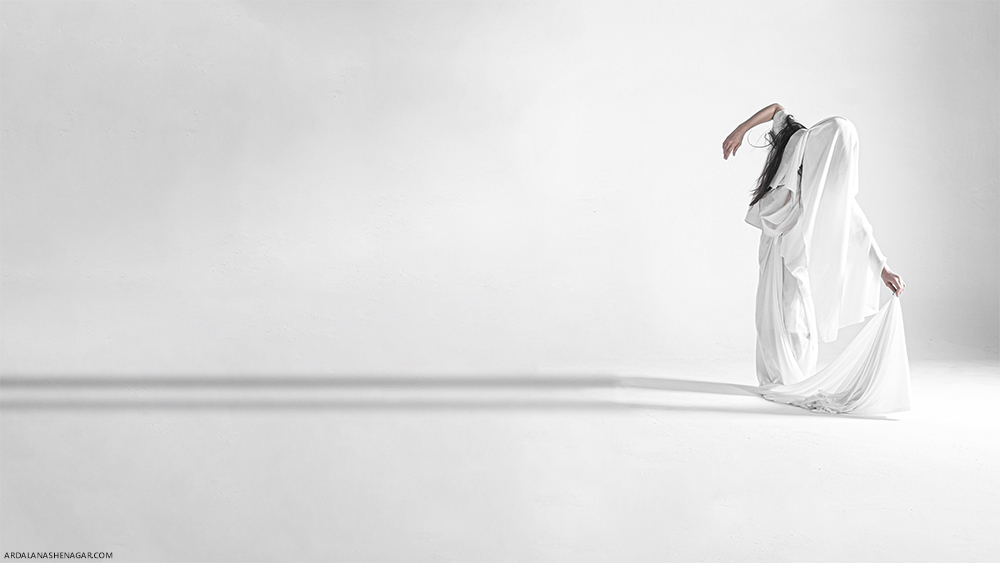
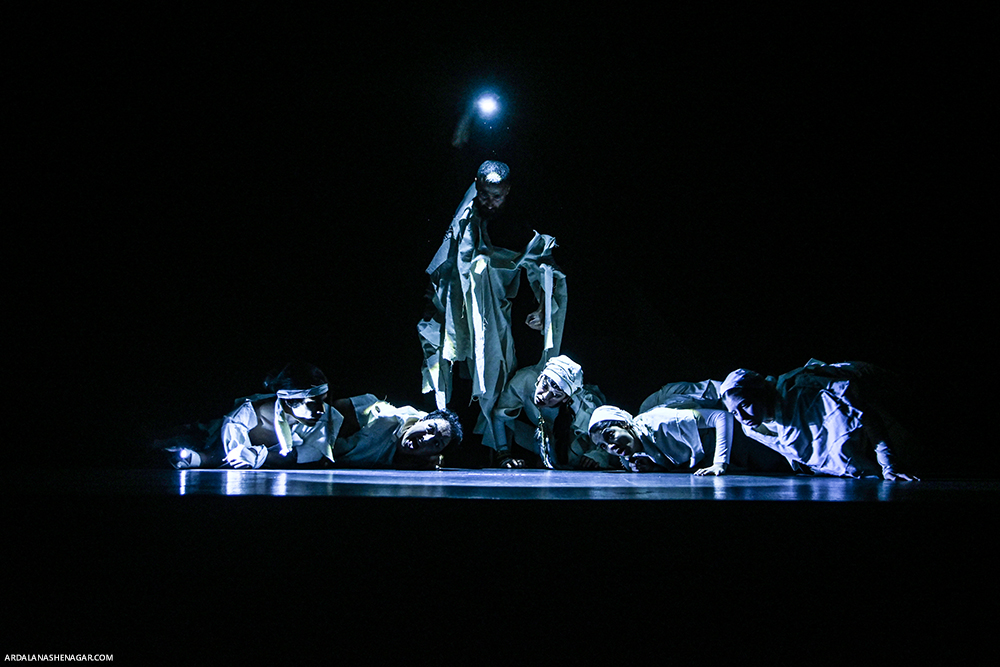
The “Divab” photo series draws on the div tradition as a means of staging a visual encounter with an invisible yet overwhelming force. In ritual studies terms, this is precisely what makes the project compelling: drought, fear, and breakdown of ordinary life are not only depicted as “events” but experienced as a condition—a transformation that spreads through bodies and environments.
That is why the series fits naturally within the logic of ritualized imagery. The photographs focus less on narrative explanation and more on the sensory charge of the situation: an atmosphere of unease, a sense of threshold, and the feeling that perception itself has been altered. Even without knowing the plot in detail, viewers can read the work through visual cues typical of ritual representation—liminality, embodiment, and the pressure of an overwhelming presence.
Choosing theater photography (rather than a purely documentary approach) is also essential. Theater already deals with form as a vehicle for invisible forces: light, posture, blocking, and costume allow the “diiv” not just to be shown, but to be felt as a presence. Through the photograph’s framing, the series captures that moment when the human world is interrupted—when the uncanny enters the scene and turns it into a site of ritual effect.
In short, Divab uses theater photography to translate mythic power into contemporary images. The resulting photographs—often saturated with a dreamlike, haunted quality—work like visual testimony to encounter: they suggest that the diiv is not simply an object of representation, but a destabilizing presence that transforms what it touches, and that transformation can be seen.
Macbeth Zaar (the Connection between Shakespeare and Ahle Hava)
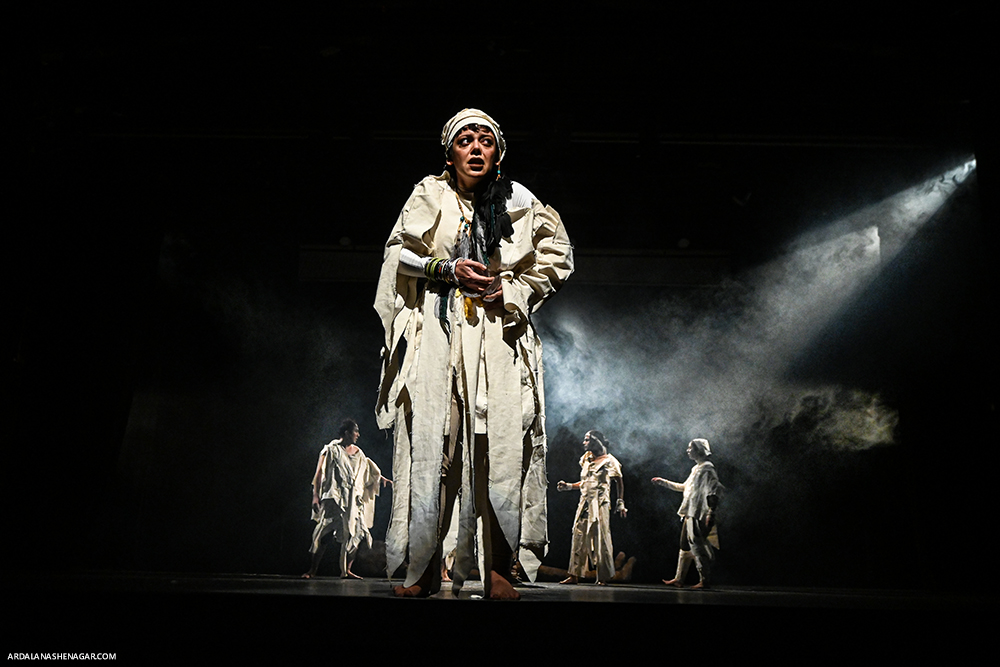
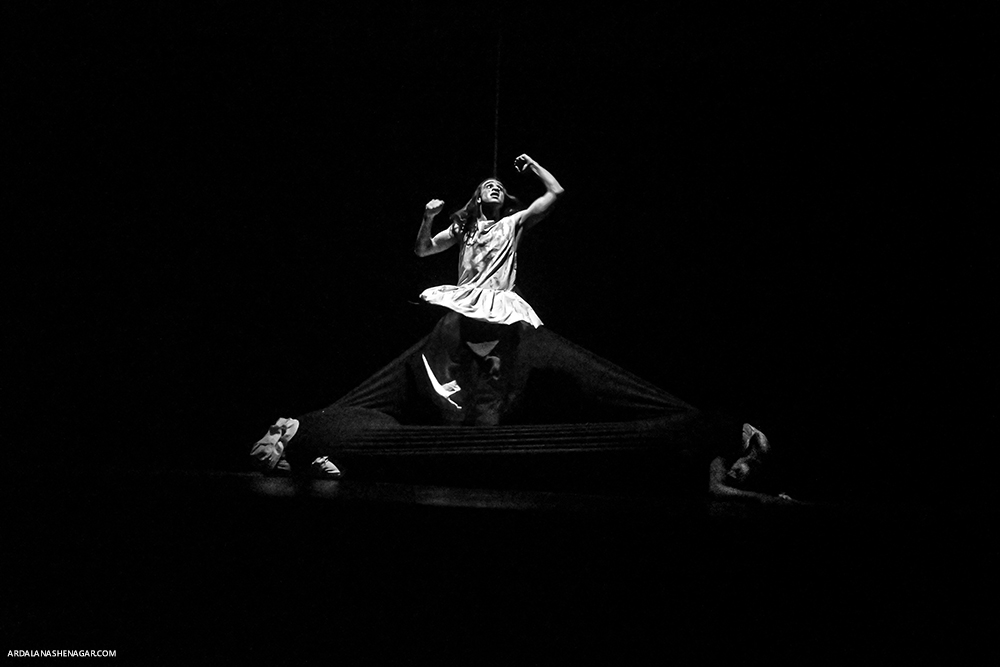
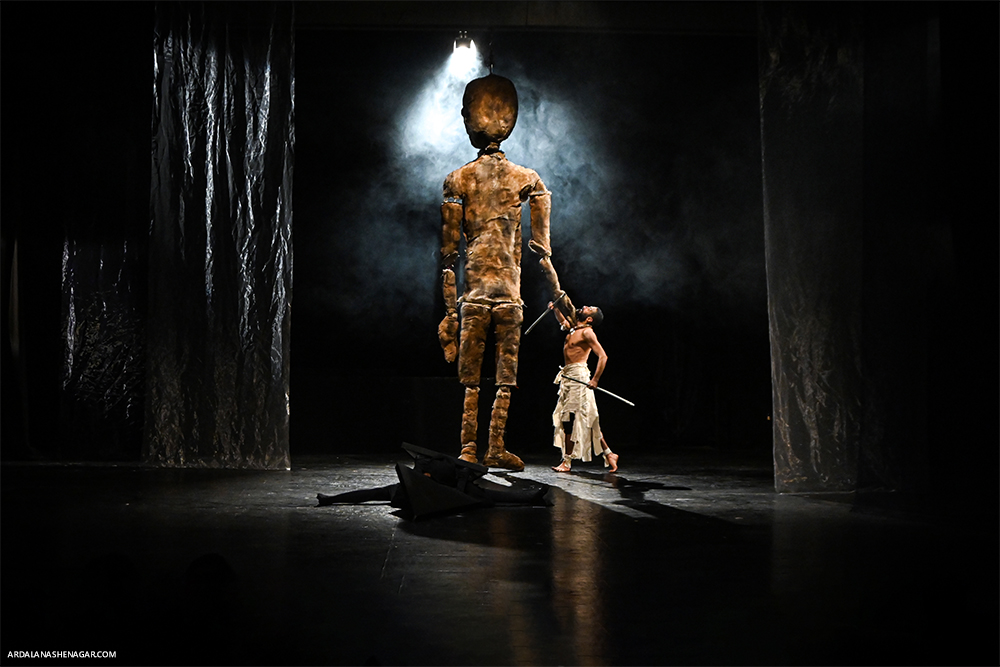
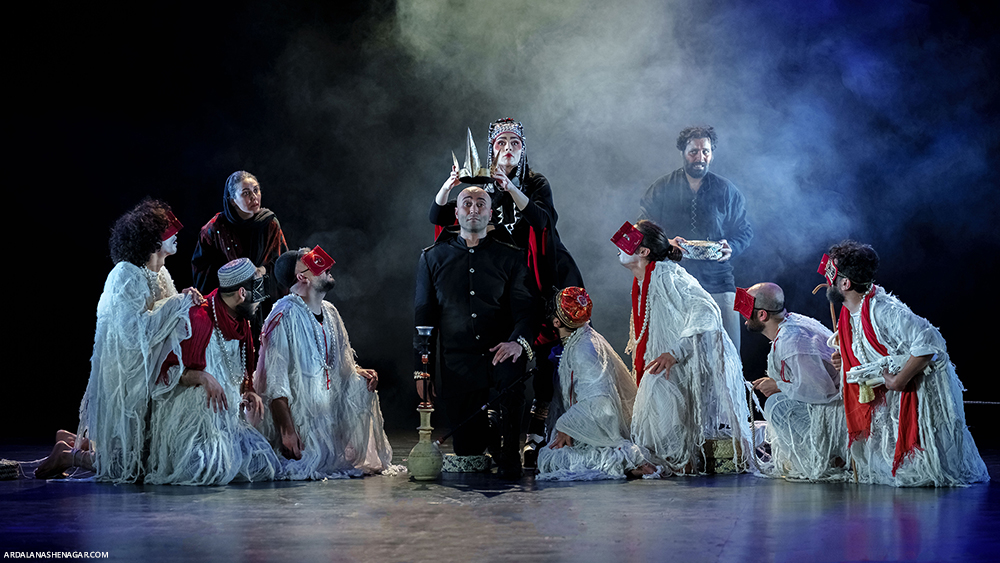
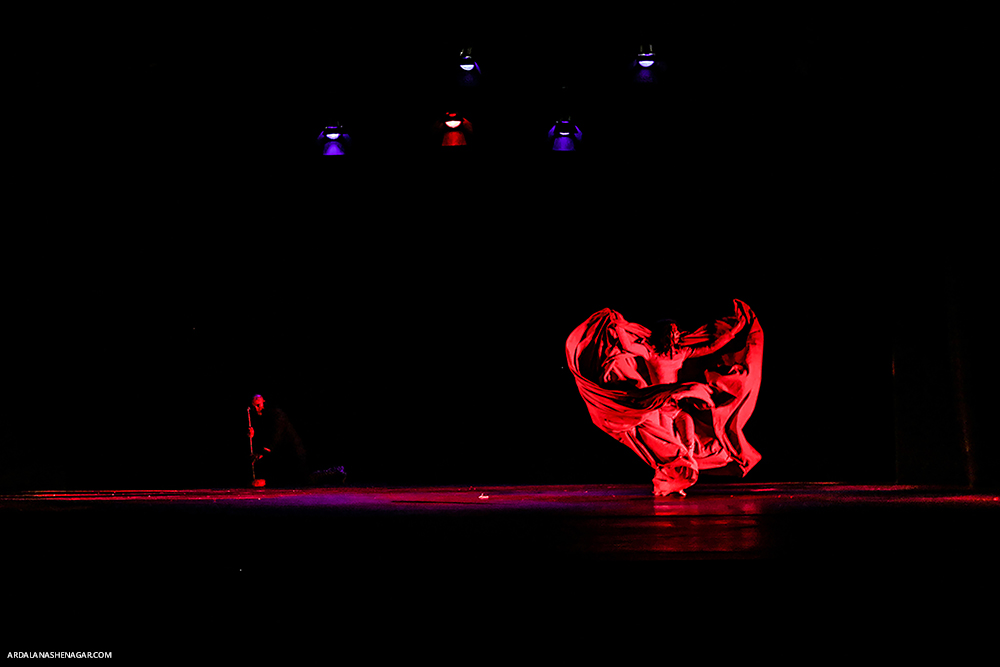
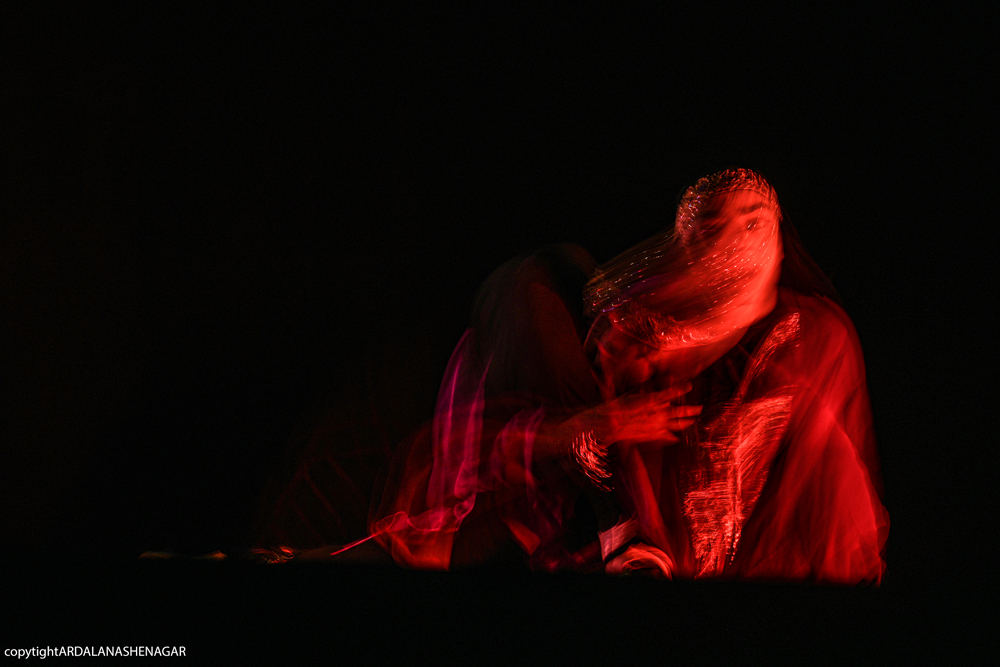
The photographic series “Macbeth Zaar” aims to establish a connection between two seemingly distant worlds: Shakespeare’s Macbeth and the Zaar tradition within Ahle Hava culture. In this work, Zaar is not treated merely as a familiar theme, but as a living part of Ahle Hava’s ritual heritage—an embodied experience shaped through bodies, voices, movement, and collective participation
The images seek to capture the kinetic and intricate nature of the Zaar ritual as one of the branches of Ahle Hava, translated into theatrical visual form. Rhythms, turns, sudden tensions, and the constant oscillation between rupture and continuity are compressed into layered, multi-dimensional compositions. The result is a body of work that feels tense, eerie, and haunting rather than explanatory or calm.In this interpretation, the project’s aim is to translate mythic force into a contemporary visual form while preserving its ritual charge. The image is therefore not merely a record of composition or stage-like aesthetics, but a document of the “effect of encounter.” The div is not simply seen; it activates something within the subject’s world—an instability of presence, a shift in gesture, a transformation of space, and the emergence of a new condition. In this sense, the div functions as a transformative force, while the human body or group appears as a kind of collective body under influence

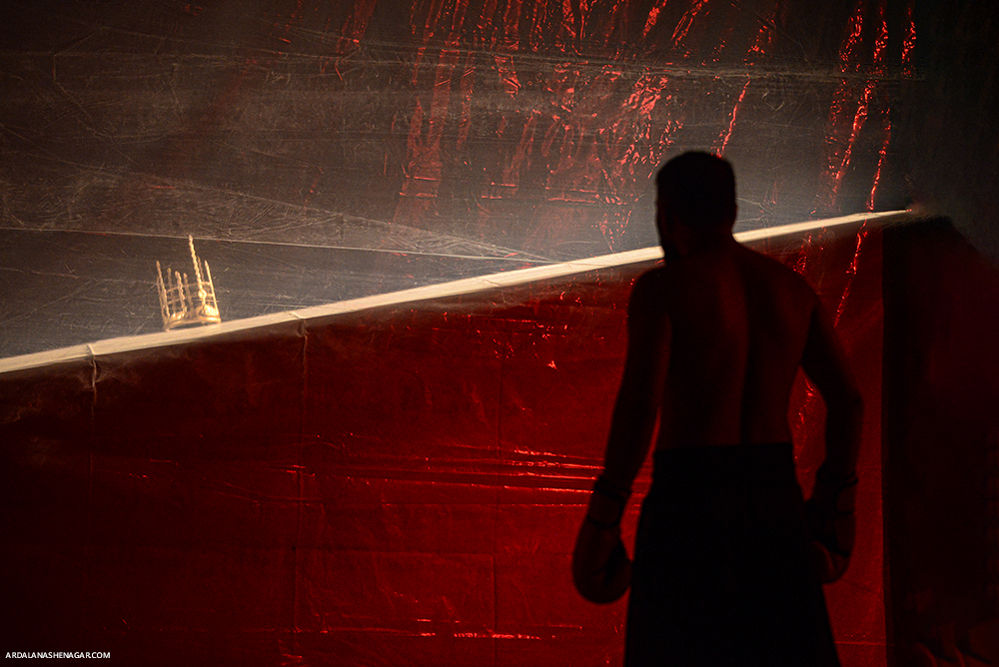
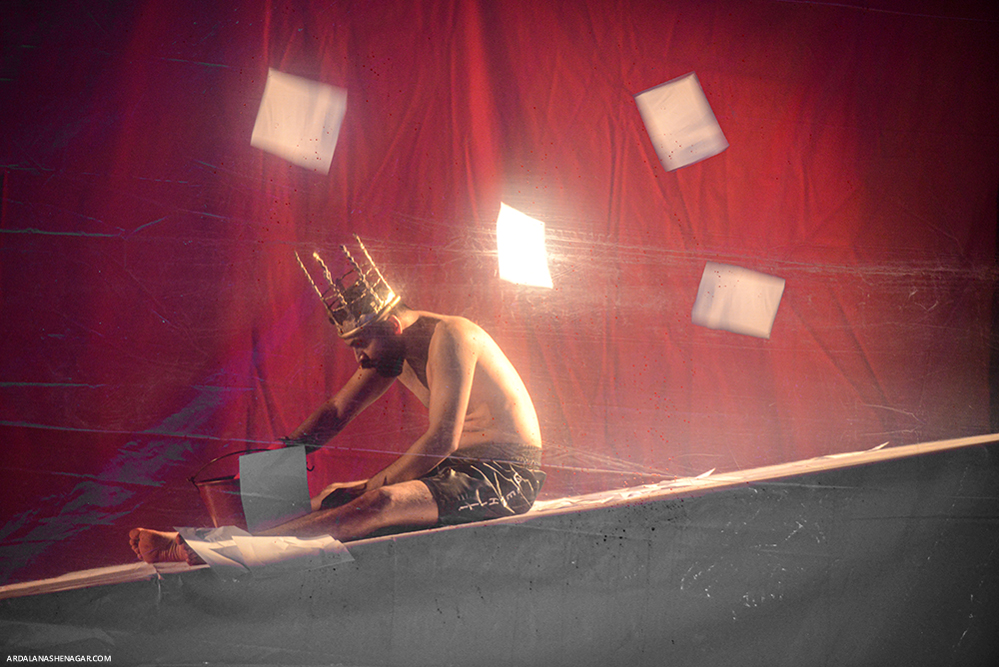
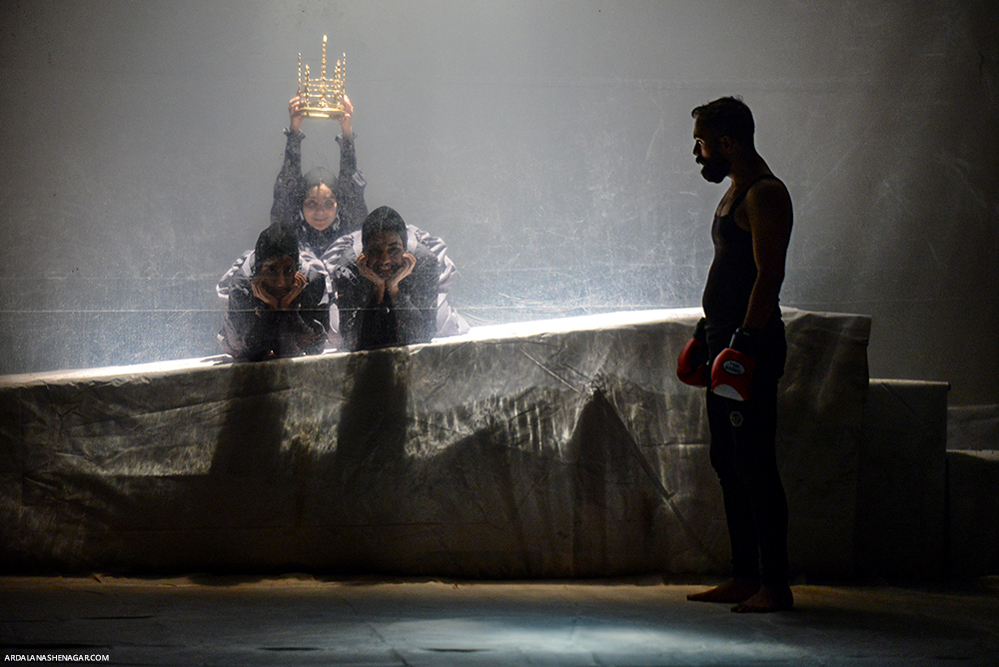
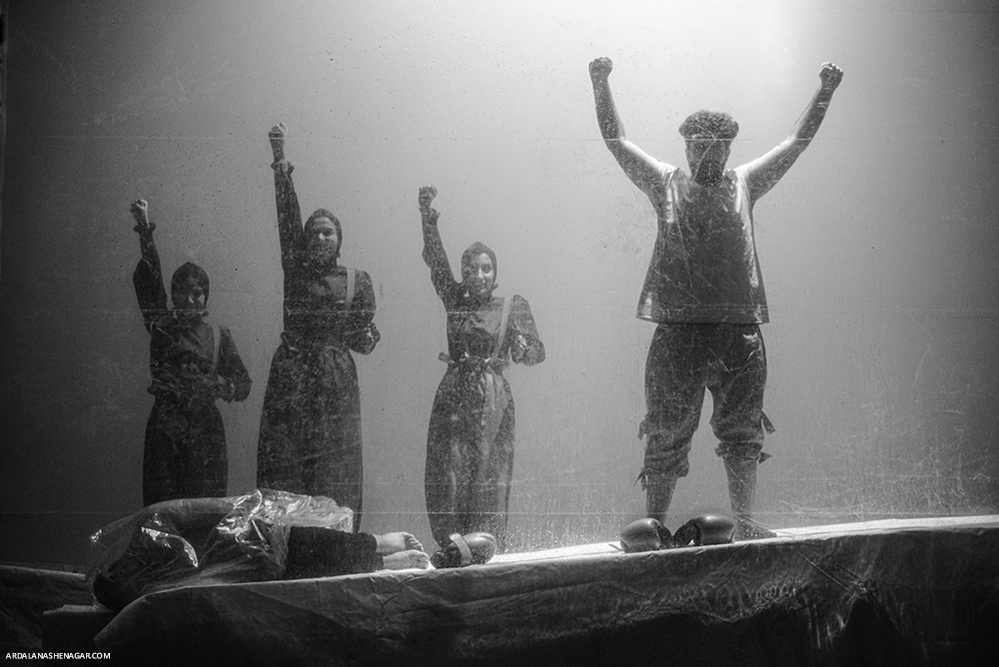
Private Auschwitz of Lady Macbeth
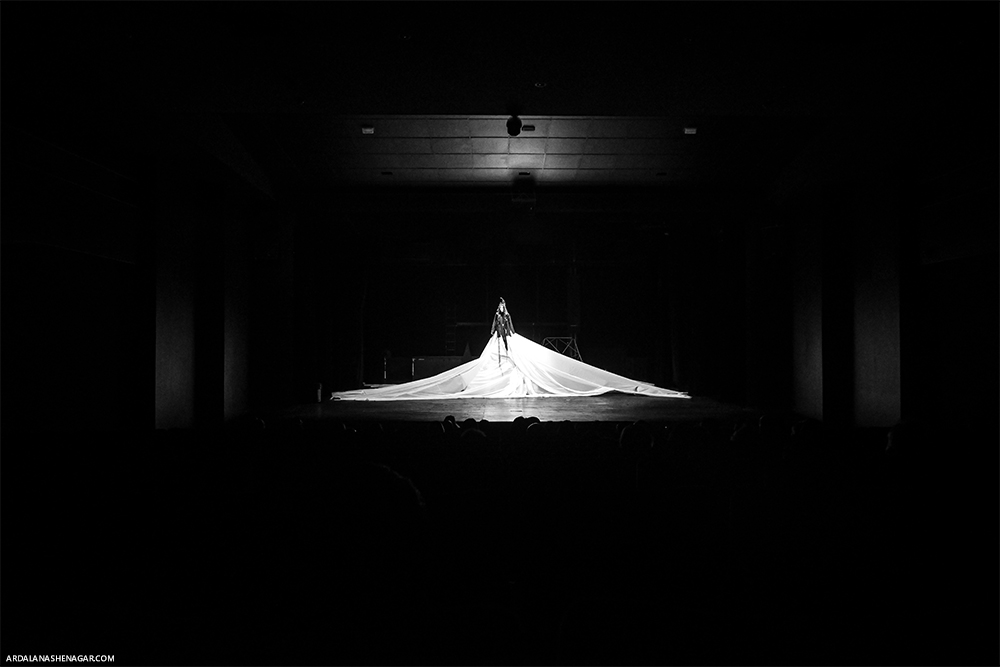
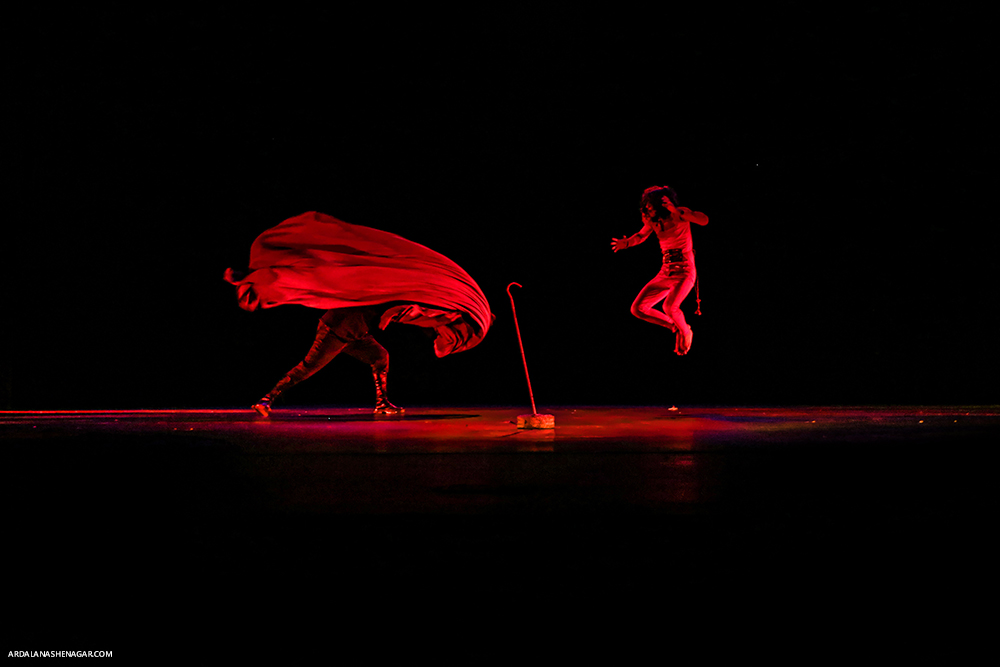
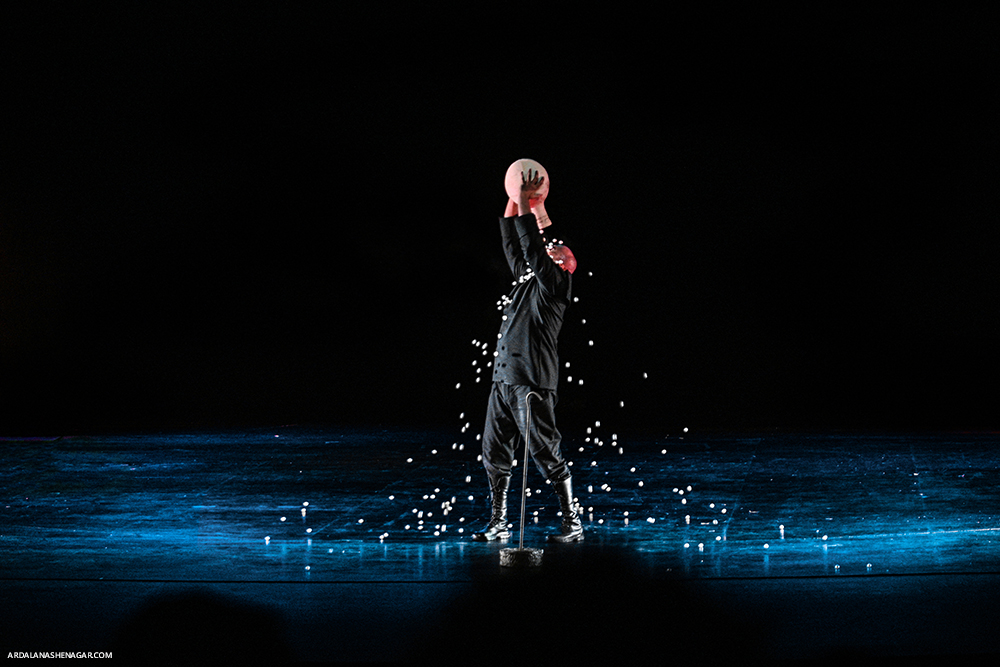
The photographic series Private Auschwitz of Lady Macbeth grows out of Macbeth, but instead of turning toward ritual as an open, collective practice, it translates ritual through power and command. The play is the starting point, while the visual world moves toward what might be called an imperative ritual logic: the repetition of gesture, the concentration of force in the body, and the transformation of will into a mechanism of performanc.
In this series, Lady Macbeth commands—not only others, but the stage itself. The images are primarily concerned with the territory of power: heavy stillness, commanding hands, threatening pauses, and frames that feel as if a ritual is about to take place. Yet this ritual is not one of cycle or calm; it is a ritual of coercion and necessity. Each photograph seems to convert speech into physical presence, as though the force of language were being made visible in the body.From this perspective, Macbeth does not become ritual in a traditional sense; rather, ritual is translated into power. Repetition becomes command, the body becomes the carrier of instruction, and the stage becomes a field of execution. This is what gives the series its epic and theatrical quality: the grandeur of the image serves the display of authority and will, creating a spectacle that feels less like a ceremony and more like an ominous act of command

Blood Wedding( Blood Wedding in the South)
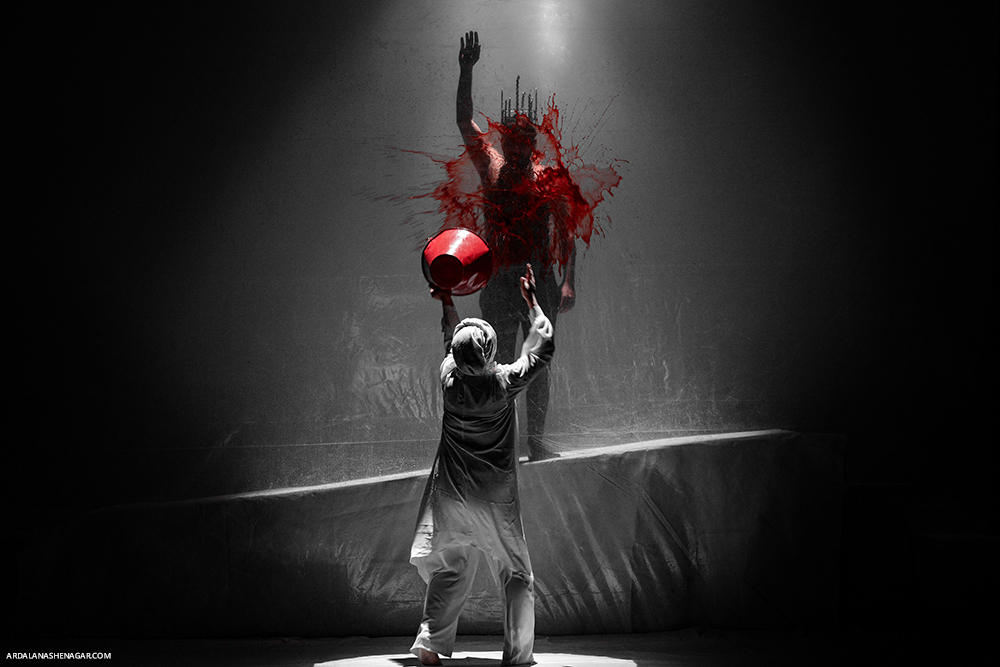
This photographic project is based on Federico García Lorca’s Blood Wedding, but its purpose goes beyond illustrating the play. The central aim is to connect Lorca’s narrative with the lived culture of the South and with the ritual logics embedded in that specific geography—where emotion, social order, the body, and collective memory are not separate from one another. In this reading, the wedding is not simply a dramatic event, but a point at which desire and taboo, mourning and violence, honor and social pressure, all emerge through embodied and spatial forms.For a cultural researcher, these images are not decorative stills or mere visual documentation of a performance; they function as a visual form of inquiry. Photography is chosen as the main medium because it can hold the tension between performance and life in a single frame: a gesture can be both enactment and custom, both sign and real force acting on bodies and relationships. In this way, the photographs seek to bring Lorca’s play into closer conversation with southern cultural life—not by imitating the external form of ritual, but by tracing the mechanisms through which ritual is produced: the repetition of gestures, the management of silence and sound, the codes of gaze, and the transformation of emotion into social order and physical action.
The project is also designed to show the “why” behind the “what”: why this tragedy may resonate in the South, why ideas such as fate, honor, grief, and violence take different forms in local culture, and how a dramatic text becomes a site of cultural research when it encounters lived experience. The photographs are not meant only to tell the story; they are meant to open a space for cultural reading. In that reading, the scene becomes a micro-world of power, pressure, and mourning, and Blood Wedding becomes a case through which the relationships between language, body, and social structure can be studied.
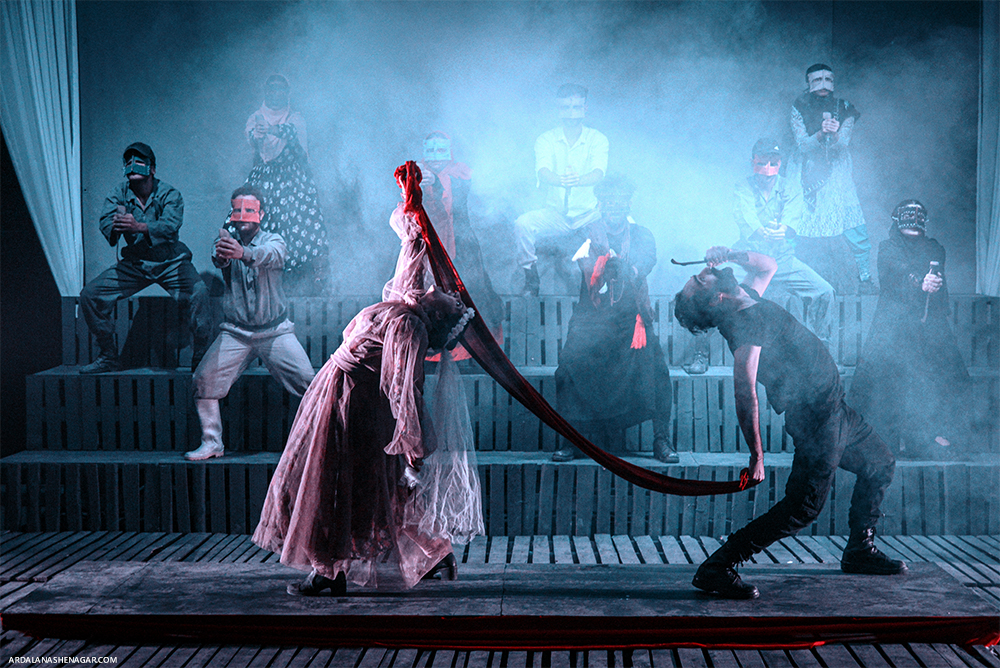
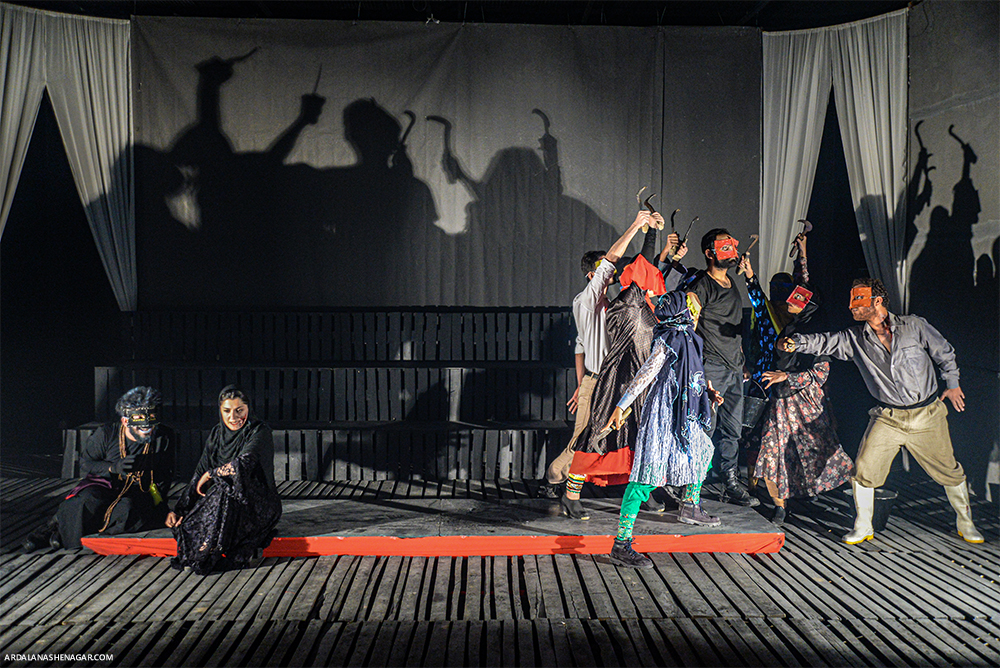
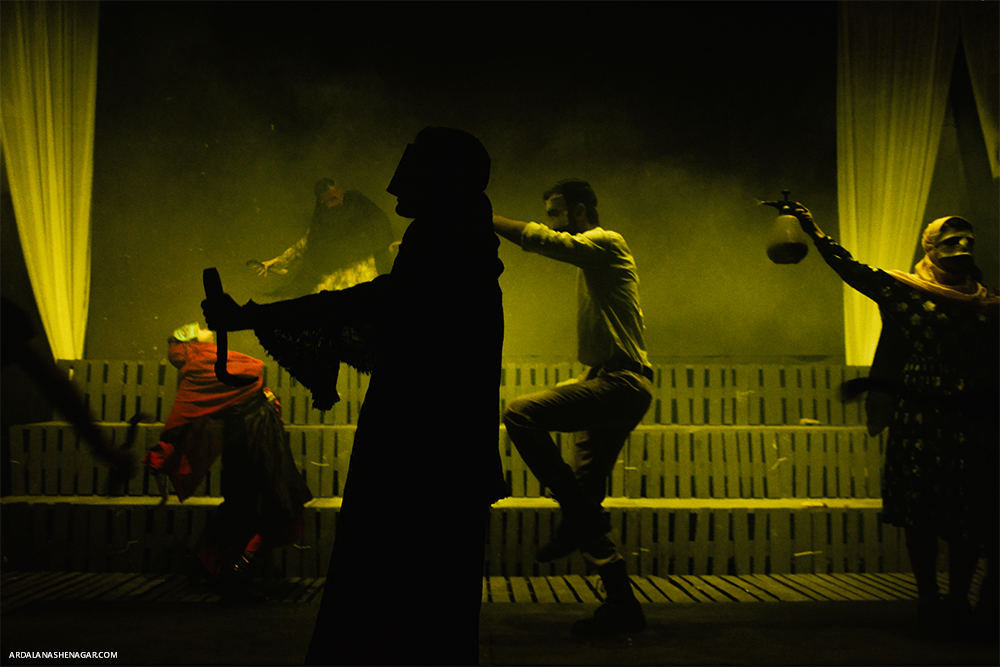
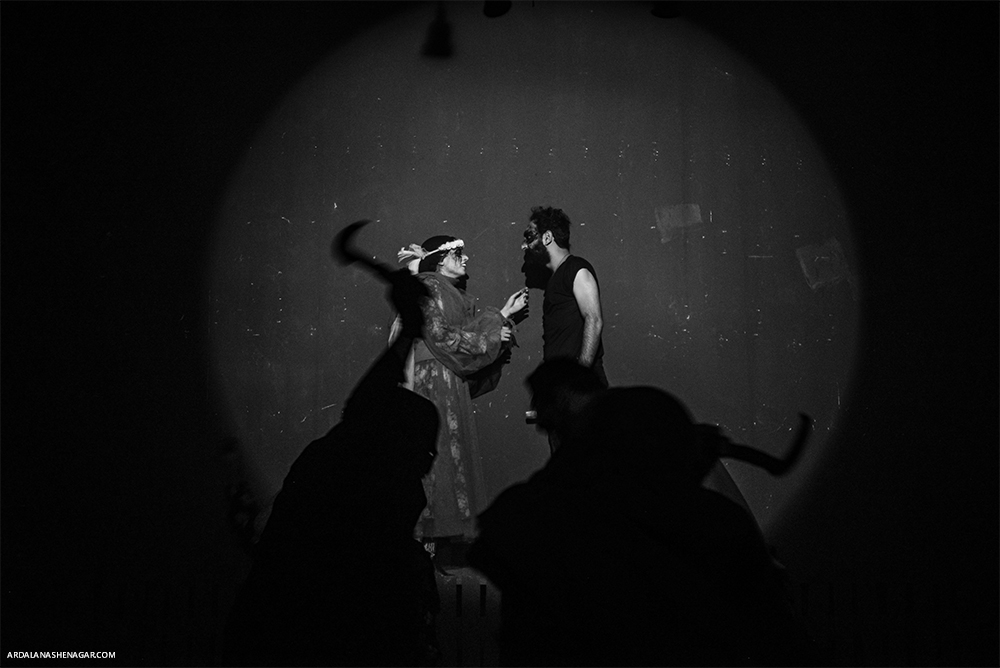
LETTERS HITCHED BY WIND
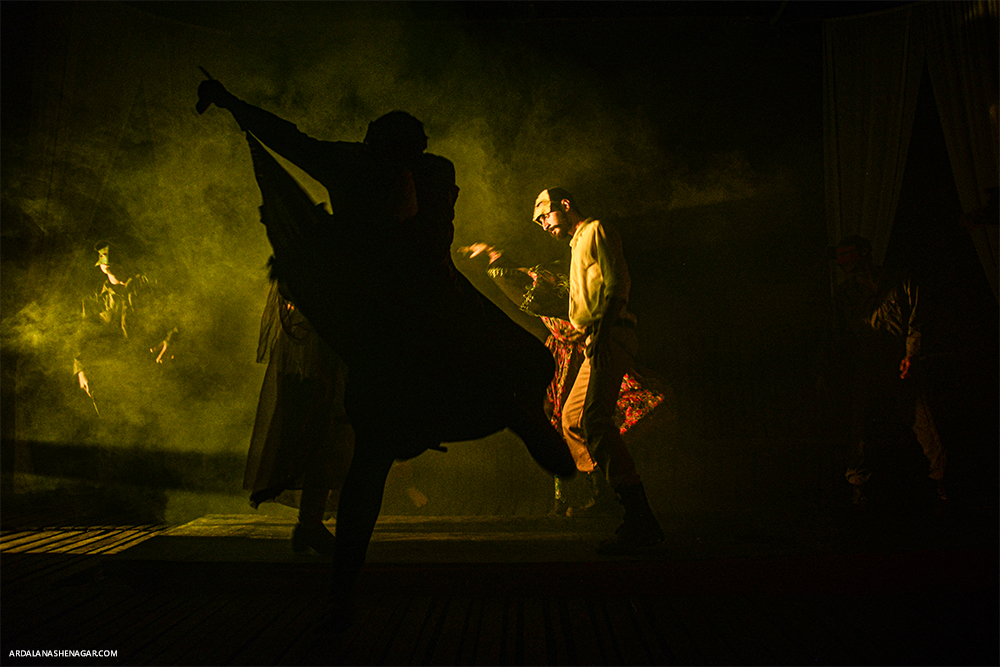
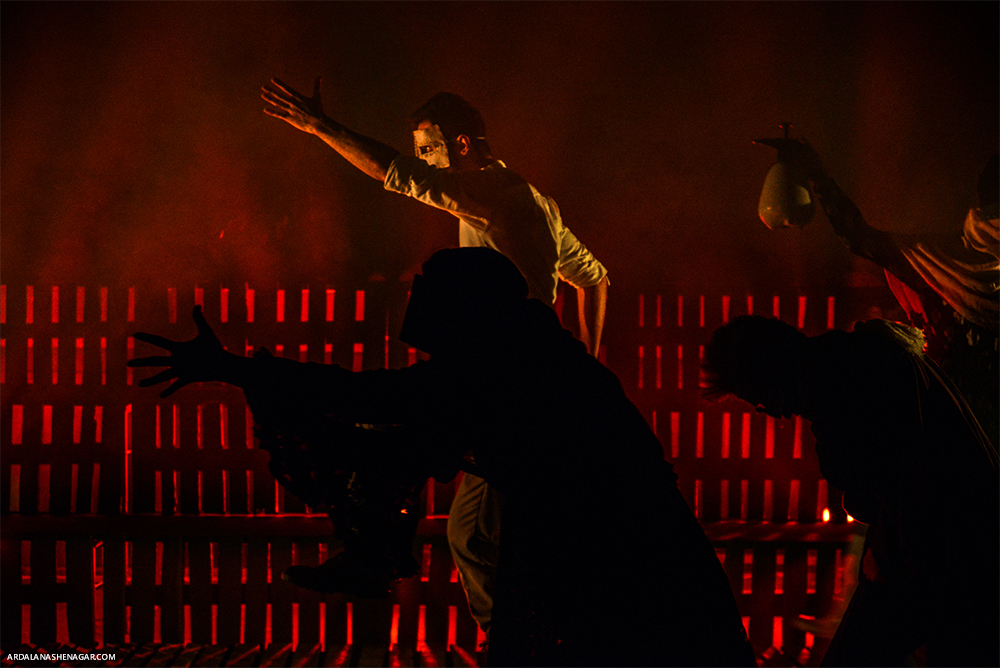
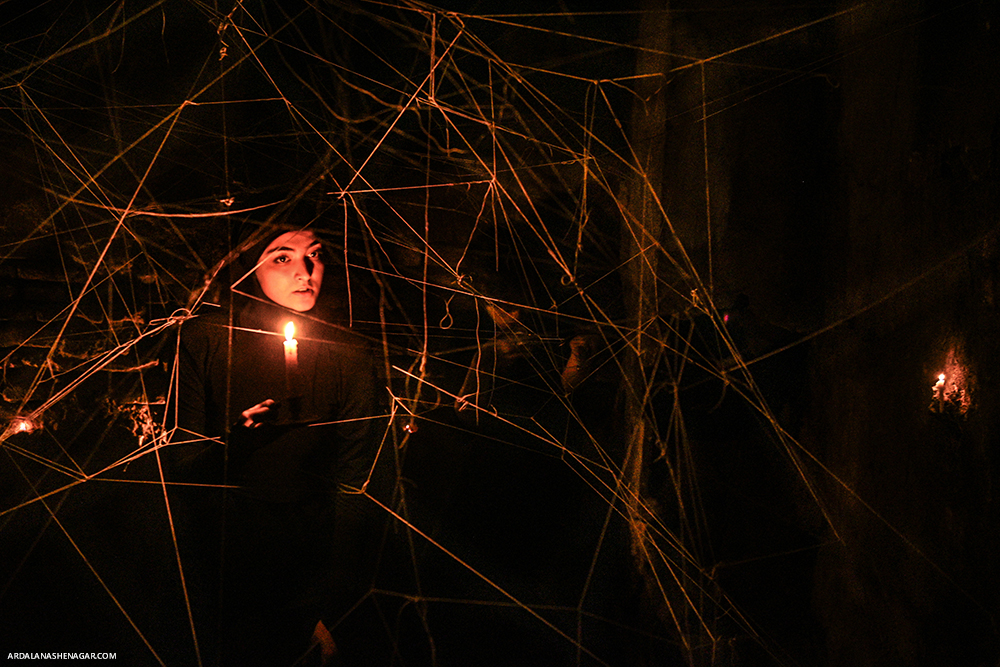
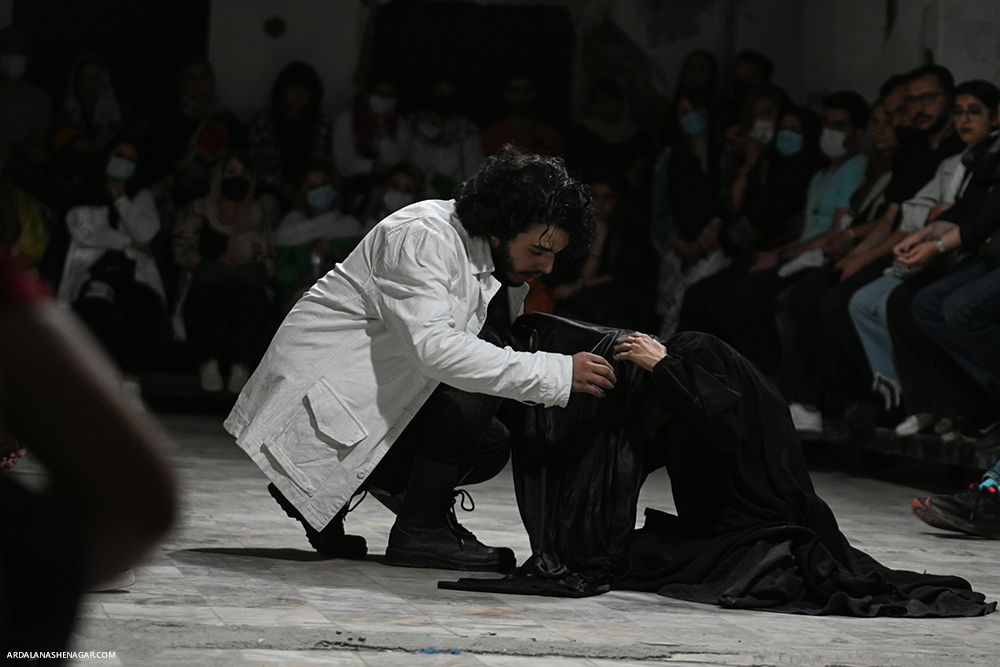
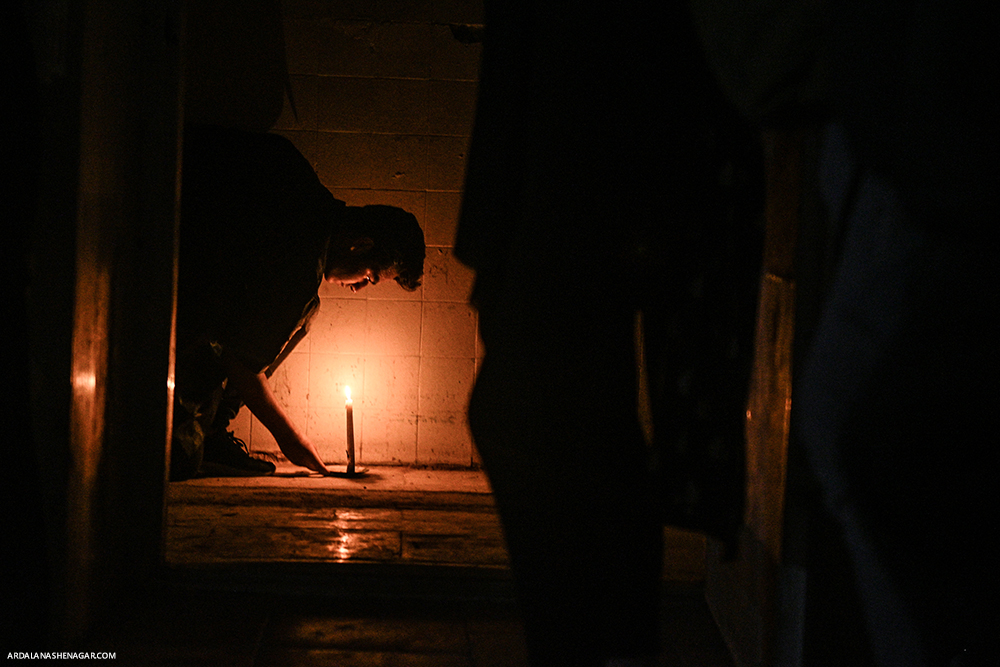
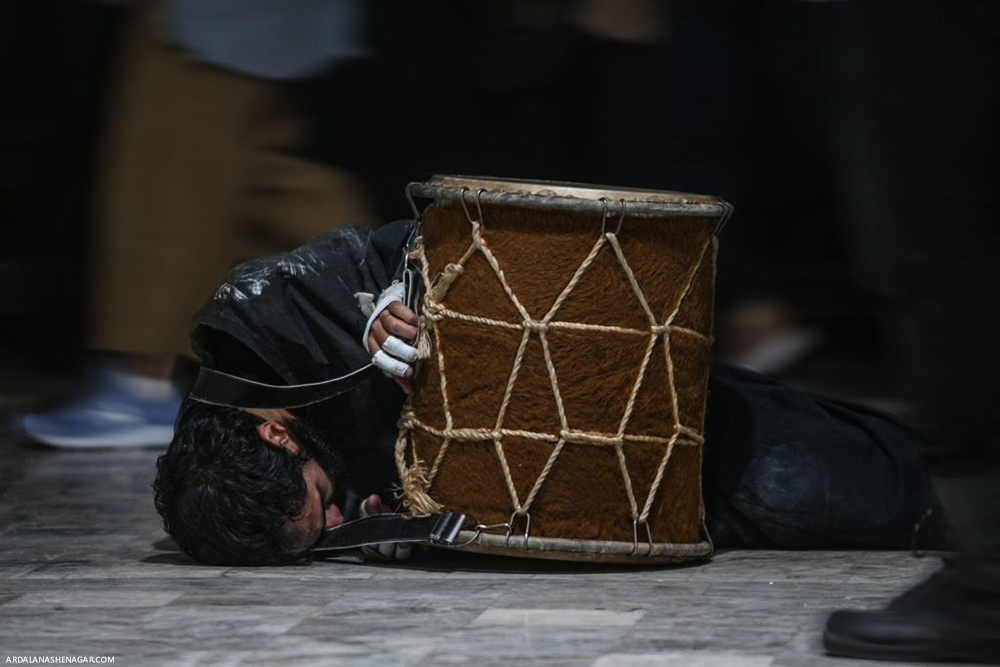
In this project, Persian mythologies appear not as a linear and complete narrative, but as living fragments—elements that can be re-read and re-encountered within a contemporary performance setting. What matters most here is the reconstruction of atmosphere, bodies, space, and signs; in other words, the elements that carry myth away from the level of story and into the level of experience. For that reason, the performance is less concerned with retelling a plot than with producing a quality of presence—present that is both familiar and distanced, rooted and contemporary.
For this reason, the photographs move within a border zone: between documentary evidence and staged representation. They do not operate as purely reportorial images, and they are not purely scenographic either. Rather, they attempt to hold on to a layered perception of the performance—something that remains in the viewer’s visual memory even after the event has passed. Photography, in this project, is selected to capture this specific quality. The images are not merely documentary records of stage design or a straightforward documentation of performance. Instead, they function as part of the project’s own reading process. They track moments in which bodies, gazes, stillness, and movement acquire meaning beyond themselves, turning into signs of an ongoing state—an aesthetic and performative situation that can feel ritual-like or mythic without relying on a direct, literal form..From this perspective, the project tries to draw mythologies out of a distant, historic narrative frame and bring them closer to a lived, immediate, and visible experience. In this process, photography acts as a mediator: between performance and audience, between the lived and the symbolic, and between an archetypal past and contemporary perception. As such, the photo series is not simply alongside the performance; it is part of the performance’s structure of meaning—an added form that helps mythologies be seen and understood in an updated, re-activated language
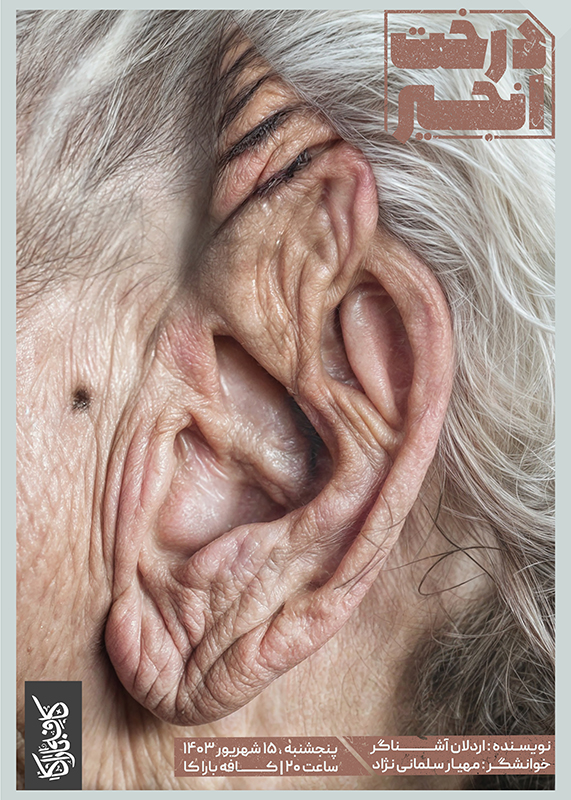
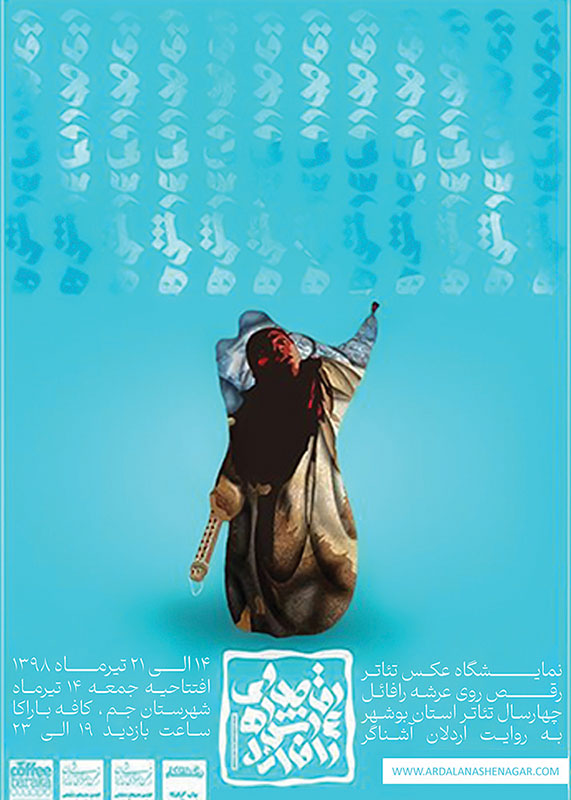
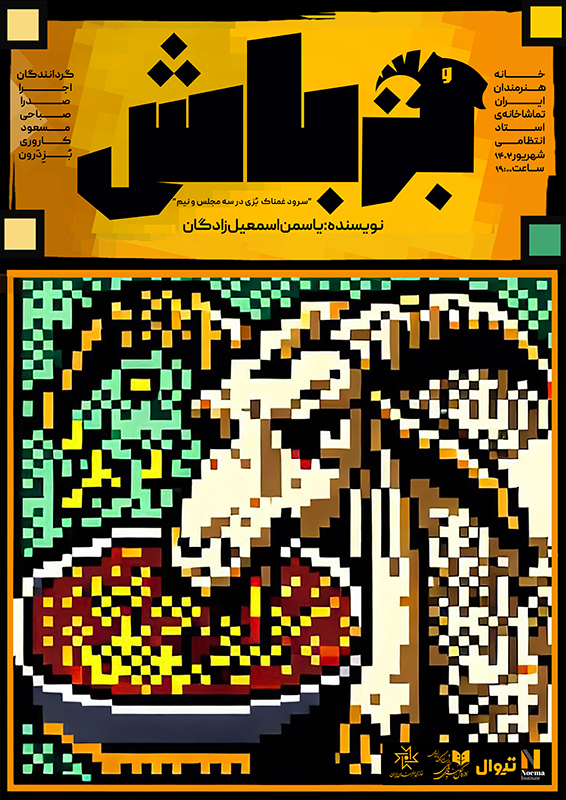
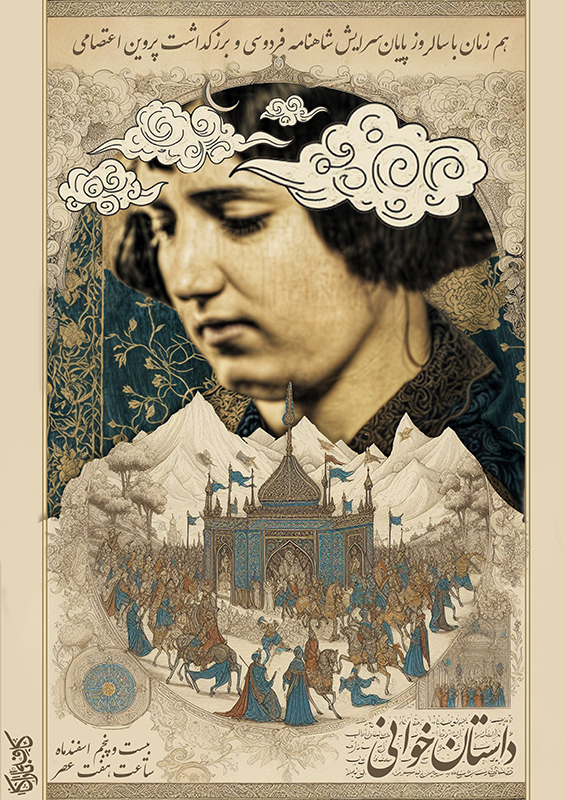
POSTERS